Author Q&A: Katie Biron, ‘The Love Tree’ – Part 1
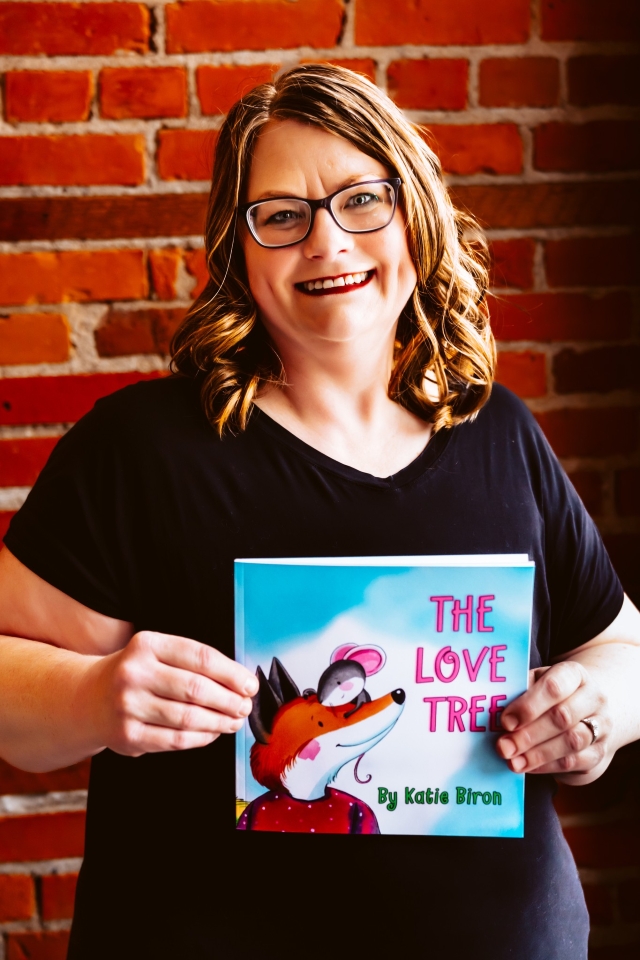
We recently published a review of the book, “The Love Tree,” written by Katie Biron. Today, we are publishing Part 1 of a Q&A with the author, who has graciously agreed to give away five copies of her book (including shipping!). Email .(JavaScript must be enabled to view this email address) if you are interested in being included in a drawing for a free book. Next week, we will publish Part 2, so be sure to check back.
Can you share a little about your background and what led you to write this book?
My favorite quote is by Maya Angelou: “Do the best you can until you know better. Then when you know better, do better.” This quote has shaped much of my journey as an adoptive mom.
I’m a mom to four amazing kids, two of whom joined our family through adoption. Both have very open adoptions, and we make it a priority to see their families as often as possible. That means my kids have two moms, two dads, siblings who don’t live in our home, and a whole network of grandparents and extended family who love them.
One day, one of my children was assigned a simple family tree project at school. Because we’ve always normalized adoption as part of their identity—and we’re intentional about using inclusive language for their first family (we say “mom,” not “birth mom” or “bio mom,” and no, our kids aren’t confused)—my child began filling out the tree. But just like Little Mouse, they quickly realized that traditional family trees don’t work well for adoptees or for kids whose families don’t fit the mom-dad-kids mold.
- We trudged through the assignment together, but in the process I realized two important things:
- The project made my child feel like something was wrong with their unique family.
- This type of assignment isn’t appropriate for elementary school students.
- Why? Because traditional family trees force kids with non-traditional families into only two options:
- Include their first family, which means revealing personal details about foster care, guardianship, same-sex parents, or other circumstances to the entire class.
- Pick and choose which family members to include, which inevitably leaves someone out.
At one point my son looked at me and asked, “Which mom do I pick?” That moment was the spark that inspired the idea for The Love Tree—a way to celebrate the beauty of family without forcing kids to erase or expose parts of who they are.
How has your perspective on family and open adoption evolved over the years?
Wow! I love this question because my perspective has changed significantly. During our initial home study process, I remember thinking that my husband and I were going to be really progressive adoptive parents because we were willing not only to tell our child they were adopted and agree to send annual letters and pictures to their first mom until they were 18 years old, but—get ready for it—we were going to allow our birth mother to choose our child’s middle name. Seriously, I felt like we deserved an openness medal!
Contrast that to today, and just reading that paragraph shows me how much my perspective has changed. Let’s see how I would write that same paragraph now.
During our initial home study process, we learned only the rudimentary basics about open adoption. We were taught that openness was a choice we could make for our child. Looking back, my husband and I knew nothing about openness or raising an adoptee. I had never heard the idea that openness and contact are not the same thing. I didn’t know that you could have openness even if you had no information about a child’s first family. I didn’t know how to build those relationships. I was scared, I was not equipped to center my child’s experience instead of my own—and that’s just the beginning.
Today, I would never refer to an expectant person as “our birth mother.” That possessiveness I showed is just gross, and no one should be labeled a birth mother before they have even given birth. Plus, I don’t own her. She is not “my” anything. I also try very hard not to use the term birth mother even after adoption. Calling someone a birth mother oversimplifies their connection to their child, as if they were nothing more than a vessel who grew a baby so someone else could be a parent. I prefer the term first family—or, like in our case, simply calling folks who they are: Mom and Mom, Dad and Dad, etc. If you’re worried your kid will be confused about who you’re referring to when you say “Mom,” you could use Mom and Mama. But my kids aren’t confused, and if they aren’t sure which mom I mean, they simply ask, “Do you mean my Mom mom or you Mom?”
And I want to go back and have a gentle but firm conversation with Katie of 20 years ago. What were you thinking, telling a woman you would allow her to choose the middle name of her unborn child? That reeks of even more possessiveness! Far better would have been asking if she planned to name her baby and then having a conversation about whether—if she decided on adoption after the baby was born—she wanted to name the baby, have us name the baby, or name the baby together.
Learn more about Katie Biron and ‘The Love Tree’ on her website, and read Part 2 of our Q&A here!