What I Needed My White Parents to Know About Being Their Black Child
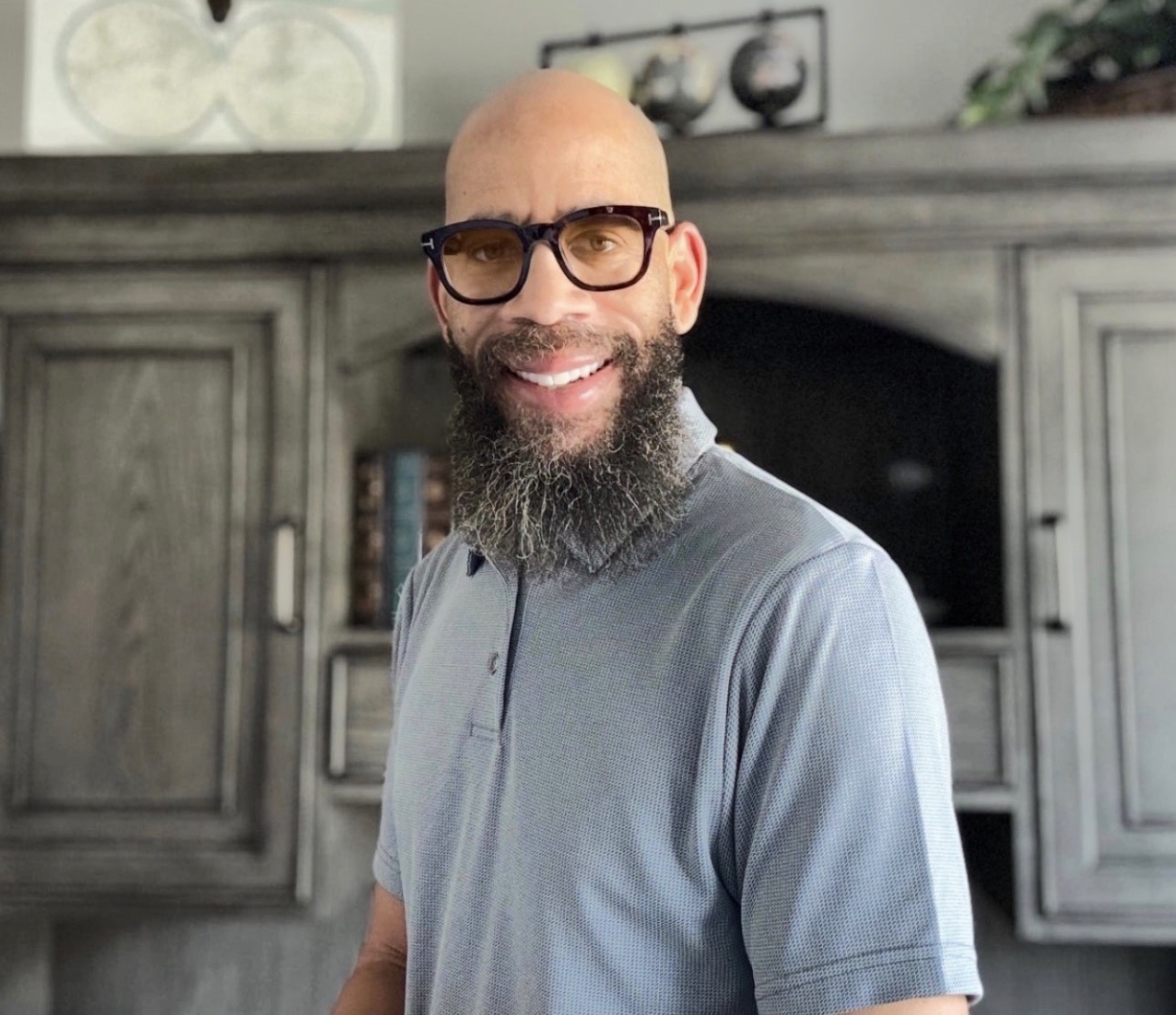
Guest post by Michael Gaither, Black Adoptee Raised in a White Family | beyondthemomentadoptionstudio.com
I was somewhere around eight or nine years old the first time I remember looking in the mirror and crying.
Not because something bad had happened that day. I was crying because I didn’t understand what I saw. I was growing up in Lincoln, Nebraska in a white family, surrounded by white neighbors, white classmates, white everything as far as I could see. And the face looking back at me in that bathroom mirror didn’t fit any of it. I couldn’t explain it then. I just felt it in my whole body, a confusion that had no words and nowhere to go.
My name is Michael Gaither. I’m a 54-year-old Black man who was adopted out of Syracuse, New York at eighteen months old and raised by a white family. I spent thirty years in education as a teacher, a principal, and a district leader, and a lot of those years I sat across from kids who reminded me of myself, kids who got labeled difficult or unfocused, when what was actually going on was something much simpler and much harder. They were carrying something that nobody around them had ever thought to look at. Writing about transracial adoption isn’t research for me. I was the child this is about, and I know what he needed that he didn’t get.
My parents were good people. They loved me genuinely and I’ve never doubted that for a second. But love without awareness still leaves marks. Some of the marks I carry today came from choices they made without ever once questioning them.
We always lived in white neighborhoods. Every mentor who came through our door was a white man. Race was never discussed at our dinner table. My biological family was never mentioned. The hair salon my mother took me to was for white women, and the stylists had no idea what to do with my hair. I used to wet it down with water before combing just to soften the pain enough to get through it. At one point I asked her if I could get it straightened so it would look like the other kids’ hair. I was probably twelve years old and I wanted a haircut that would help me disappear into my surroundings.
What I needed, and what I never got, was consistent and intentional exposure to Black culture from the time I was small. Not an occasional field trip but something woven into ordinary life in our home. Black music, Black history, Black professionals, Black families just living their everyday lives. I needed to see myself in the world around me, and I needed the people raising me to be the ones who made that happen. They never did, not because they were bad people, but because they built the only world they understood. And that world was all white.
That absence sent me out into the world completely unprepared for the moments when Black peers looked at me and saw someone who didn’t know how to be Black. I didn’t have the tools for those moments because nobody had ever given me any. I spent years feeling like I didn’t belong anywhere, not with my white peers and not with my Black ones. That’s a specific kind of alone that’s hard to explain to someone who hasn’t felt it from the inside.
When I was in 8th grade, a PE teacher named Tim Carroll changed the direction of my life. He was the first Black teacher I had ever had. He invited me to his house for meals, took me for rides and let me just talk, and on my worst days he never once made me feel like I was too much. I became a good student that year because I wanted him to be proud of me, not because anything inside me had been fixed, but because for the first time, someone who looked like me was paying close attention.
That was one person in one year of school. Think about what consistent access to adults like him could have done.
Your child needs that. Not as a nice-to-have but as something genuinely necessary. A Black barber, a Black mentor, a Black therapist, a Black community. These aren’t optional additions. They’re part of what you signed up for when you brought a Black child into your home.
I found my biological family when I was 49 years old. The first time I looked at someone and saw my own face looking back at me, I was nearly 50. That moment undid something I had been carrying for decades. It also showed me, clearly, what all those years of silence had cost.
Your child doesn’t have to wait that long to start knowing who they are. The conversations you have at your dinner table, the adults you bring into their life, the culture you make room for at home, those are the things that determine whether your child grows up standing on something solid or still searching for it when they’re fifty years old.
Michael Gaither is a Black adoptee raised by a white family in Lincoln, Nebraska, who reunited with his biological family at 49. He spent 30 years in education as a teacher, principal, district administrator, and executive leadership coach. His work at Beyond the Moment Adoption Studio helps white parents raising Black children understand the experience from the inside.
If this piece resonated with you, Michael offers a free guide, “7 Conversations Every White Parent Must Have With Their Black Child,” at beyondthemomentadoptionstudio.com/#community. His guide “Raising a Black Child in a White Family” is also available at payhip.com/b/hD5Qj.